
We Are Not From Here Review: Three Teens, One Deadly Train and a Journey No Child Should Make
Pulga, Chico and Pequeña flee gang violence in Guatemala on La Bestia, the deadly train north. Our review of Jenny Torres Sanchez's Pura Belpre Honor novel, its characters, Chico's fate and the ending.
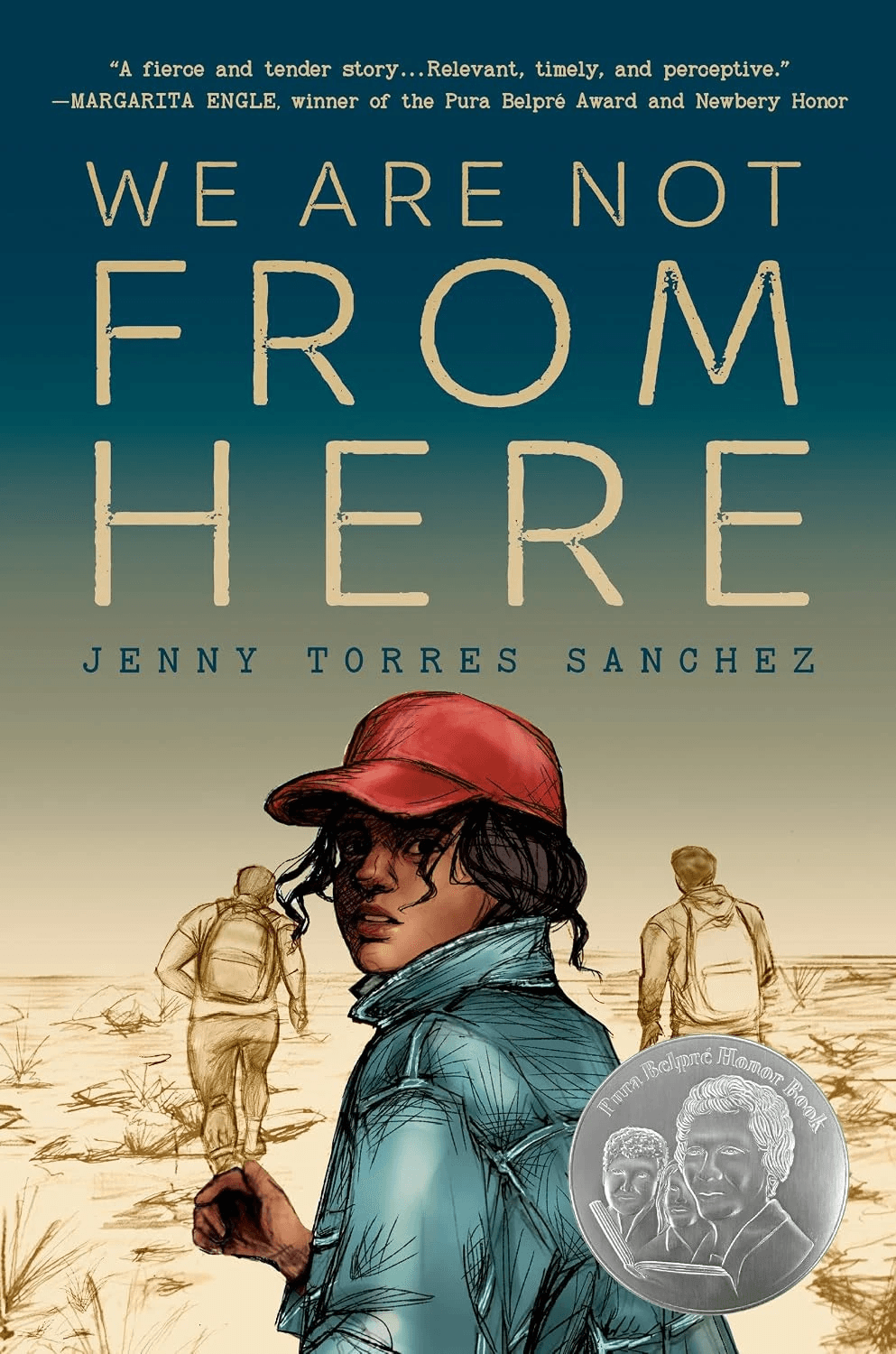
We Are Not From Here by Jenny Torres Sanchez is a devastating young adult novel about three teenagers who flee violence in Guatemala. They attempt the dangerous journey north to the United States, riding the freight train known as La Bestia. It is beautifully written, deeply humane and one of the hardest books we have read this year. We give it 4.5 out of 5. Philomel Books published it in 2020, and it was named a Pura Belpré Honor Book. Below you will find what the book is about, a spoiler-free summary, the characters and their ages, our honest review, content warnings, answers to the most common questions about Chico, and the ending explained.
What is We Are Not From Here about?
Pulga, his best friend Chico and his cousin Pequeña live in Puerto Barrios, Guatemala. Pulga dreams of being a musician, Chico is the funny, tender heart of their friendship, and Pequeña is quiet, guarded and hiding a terrible secret. All three are caught in the reach of Rey, a dangerous gang leader who controls their neighbourhood.
When the boys witness a brutal crime and Rey turns his attention to Pequeña, they realize staying means death. With almost nothing, they leave everything behind and set out for the United States, through Mexico and across the desert, clinging to the roof of La Bestia. The freight train carries migrants north, and it kills or maims many of those who ride it.
We Are Not From Here summary (spoiler-free)
- Part One, Mi Tierra: life in Guatemala, Pequeña's pregnancy, and the violence that forces the three to run.
- Part Two, Donde Vive La Bestia: the first steps of the journey through Guatemala and into Mexico.
- Part Three, El Viaje: weeks on top of the train, with hunger, exhaustion, police, gangs and the kindness of strangers.
- Part Four, Despedidas: the desert crossing and what waits on the other side of the border.
The chapters alternate between Pulga and Pequeña, so we see the journey through both a hopeful boy and a girl carrying trauma she cannot speak about.
We Are Not From Here characters
- Pulga: fifteen years old, the narrator of half the book, a music lover who dreams of a better life and feels responsible for everyone.
- Pequeña: seventeen, Pulga's cousin, not by blood but by love, who has just given birth and is running from Rey.
- Chico: about thirteen, Pulga's best friend and adopted brother, gentle, joking and grieving his mother.
- Rey: the gang leader whose violence drives them out of their home.
- Mamá and Tía Lucia: the mothers they leave behind, who love them and cannot protect them.
The names are nicknames: Pulga means flea and Pequeña means little one, small names for children forced to carry enormous burdens.
Our review of We Are Not From Here: what works
A journey made unbearably real
Sanchez does not soften anything. The heat, the hunger, the fear of falling asleep on a moving train and the constant danger from gangs and police are described with such detail that the reader feels every mile. It is fiction, but it is built on the real experiences of thousands of children.
Two voices that break your heart
Pulga's chapters are full of hope, humour and music, while Pequeña's are numb and haunted. The contrast is powerful, and the slow revelation of what happened to Pequeña is handled with great care.
Kindness in the darkness
Among the cruelty there are moments of startling generosity: a shelter that feeds them, strangers who help without asking anything. These moments keep the book from being only despair.
A book that matters
The author dedicates it to the real children who died in United States custody. It humanizes migrants who are too often reduced to headlines, and it is one of the most important YA novels about immigration.
What stood out when we read We Are Not From Here
Consider a few specific moments from the book that shaped our verdict:
- Pulga's dream has a source. He wants to be the kind of artist his father was, a musician who dreamed big, and that inherited hope is what keeps his chapters so bright against everything that happens.
- Before they ever leave, the book shows how gangs pull children in. The gang hands the boys a backpack, an address and an order to bring back the money, and Pulga is too frightened even to look inside the bag.
- The first goal of the journey is painfully concrete: cross the river into Mexico and reach a migrant shelter in Tapachula before dark. Small, practical plans like this make the larger danger feel even bigger.
Other takes worth reading: the Kirkus review of We Are Not From Here and Jenny Torres Sanchez's official website.
What does not work as well
Relentless darkness
The suffering rarely lets up, and some readers may find the cumulative weight too much. This is not a book to read casually.
A slow first part
The opening section in Guatemala takes its time before the journey begins, though it is essential for understanding why they leave.
Does Chico die in We Are Not From Here? (spoilers)
Spoiler warning: this section answers the most searched questions about Chico.
Yes. Chico dies during the train journey, in Part Three, roughly two-thirds of the way through the book. Exhausted and starving after days on top of La Bestia, he loses his grip and falls from the train. Strangers try to save him with CPR and a defibrillator, but they cannot bring him back. Exact page numbers differ between hardcover, paperback and ebook editions.
His death is the emotional centre of the novel. Pulga blames himself for pushing Chico to keep going and believes it should have been him. Pequeña convinces him to keep going for Chico's sake, and the promise they made to each other, that they would make it, becomes the reason they continue.
We Are Not From Here content warnings
This is a young adult novel best suited to readers aged about 14 and up, ideally with an adult to talk to. It includes:
- Sexual assault and its aftermath, including pregnancy
- Gang violence, murder and threats
- The death of a child
- Abuse by authorities and detention of children
- Hunger, dehydration and severe injury
- Strong language
We Are Not From Here ending explained (spoilers)
After Chico's death, Pulga and Pequeña keep riding north and finally cross the desert on foot, so dehydrated they begin to hallucinate. They reach the other side and are picked up by the United States Border Patrol. Instead of safety, they are separated and held in detention, where Pulga is locked in a crowded holding facility, cold, hungry and caring for a small boy named Nene who has lost his father in the desert.
In the final chapter, a lawyer finds Pulga because Pequeña survived and contacted his mother, who contacted his aunt in the United States. He is released to his father's sister while his case is heard. On the phone, his mother sobs with relief. Pulga feels nothing at first, until, in the car, his frozen heart finally breaks open in a long scream. The last lines are fragile but hopeful: he remembers who he is, he wants to live, and maybe he will make it. The ending does not pretend everything is fixed, but it allows a small, hard-won light.
Books like We Are Not From Here
- Enrique's Journey by Sonia Nazario: the true story of a boy who rides the trains north to find his mother.
- The Only Road by Alexandra Diaz: a middle grade novel about two Guatemalan cousins fleeing gang violence.
- Clap When You Land by Elizabeth Acevedo: grief, family and two worlds, told in verse.
Browse all our young adult book reviews for more powerful YA reads, or try our review of As Brave as You by Jason Reynolds for a gentler story about courage.
Final verdict
We Are Not From Here is a heartbreaking, essential novel that turns a journey many people only see in the news into something personal and unforgettable. It is relentless and painful, but its love for its characters and its quiet hope make it a book everyone should read, especially teens.
Our rating: 4.5 out of 5. Best for: older teens and adults, classrooms discussing immigration, and readers of powerful, socially conscious YA fiction.
Timothy Marks is the editor of Book Vampires. He manages the website and its content, reviews fiction across every genre we cover, and checks and approves every review and article we publish.
Keep reading
 Young Adult
The Darkening Review: A Living Storm, a Paranoid Prince and a Girl Who Will Not Give Up
The Darkening by Sunya Mara
A living Storm is swallowing Vesper's city ring by ring, and to save her captured father she must win the heart of a paranoid prince. Our review of Sunya Mara's YA fantasy, its age rating and the ending explained.
 Young Adult
Where the Dark Stands Still Review: A Witch, a Forest Demon and a Year-Long Bargain
Where the Dark Stands Still by A. B. Poranek
To wish away her dangerous magic, Liska bargains a year of her life to the demon warden of a cursed wood. Our review of A. B. Poranek's gothic YA romantasy, its age rating, spice level and ending explained.
 Young Adult
As Brave as You Review: A Blind Grandfather, a Room Full of Birds and a Birthday Gone Wrong
As Brave as You by Jason Reynolds
Two Brooklyn brothers spend the summer with a blind grandfather who never leaves the house, and his birthday plan for Ernie goes badly wrong. Our review of Jason Reynolds' award winner, its themes and ending.