
Who Fears Death Review: A Sorceress Born of War Who Rewrites Her World
Born of war and hunted by her sorcerer father, Onyesonwu sets out to rewrite the book that enslaves her people. Our review of Nnedi Okorafor's award-winning novel, its series order, HBO news and both endings.
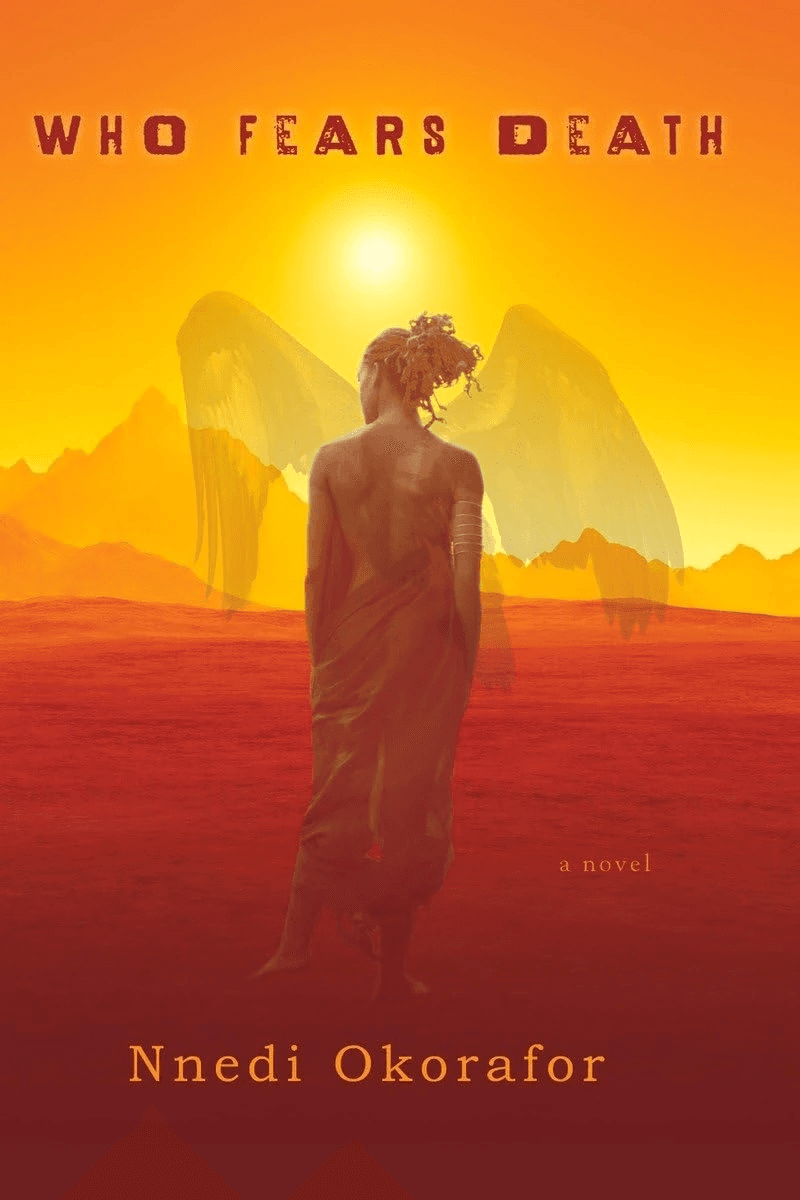
Who Fears Death by Nnedi Okorafor is a fierce, furious and unforgettable novel about a young sorceress born of violence who sets out to rewrite the story that enslaves her people. Set in a far-future, post-apocalyptic Sudan, it blends science fiction, African mythology and epic fantasy into something entirely its own. We give it 4.3 out of 5. DAW Books published it in June 2010, and it won the 2011 World Fantasy Award for Best Novel. Below you will find what the book is about, the characters, whether it is science fiction or fantasy, the series reading order, the HBO adaptation news, content warnings, our honest review and both of its endings explained.
What is Who Fears Death about?
Long after a catastrophe has reshaped the world, the Seven Rivers Kingdom in what was once Sudan is ruled by a sacred text called the Great Book. It teaches that the light-skinned Nuru are destined to rule and that the dark-skinned Okeke were made to serve them. When the Okeke rise up, the Nuru answer with genocide, and with rape used as a weapon of war.
Onyesonwu is the child of one of those attacks. Her mother, Najeeba, survives the assault and flees into the desert, where she raises her daughter alone. Onyesonwu is Ewu, a child of mixed Okeke and Nuru blood, and people treat her as cursed. Her name means "who fears death" in an old language, and she grows up to live up to it. As a teenager in the town of Jwahir, she discovers that she has extraordinary powers: she can change shape, travel into the spirit world and heal or destroy. She also learns that her biological father is a powerful Nuru sorcerer, Daib, who wants her dead. A prophecy says a Nuru man will be brought down by his own Ewu child, and Onyesonwu sets out across the desert to fulfil it.
Who Fears Death summary (spoiler-free)
The novel is told in three parts, narrated by Onyesonwu from a prison cell as she tells her story to a Nuru man who records it.
- Part I, Becoming: Onyesonwu's childhood with her mother and her loving stepfather, the blacksmith Fadil, the painful Eleventh Year Rite she undergoes with three other girls, and the first signs of her magic.
- Part II, Student: her training with the reluctant sorcerer Aro, and her deepening love for Mwita, an Ewu healer and sorcerer who becomes her partner.
- Part III, Warrior: a dangerous journey west across the desert with Mwita and her closest friends, Luyu, Binta and Diti, along with Fanasi, toward the land of the Nuru and her father.
Who Fears Death characters
- Onyesonwu: angry, stubborn and powerful, a heroine who refuses to be silenced. She is one of the most memorable women in speculative fiction.
- Najeeba: her mother, whose strength after unimaginable trauma is the quiet backbone of the book.
- Mwita: Onyesonwu's great love, a gentle, gifted Ewu healer and sorcerer who loves her fiercely.
- Aro: the harsh, wise sorcerer who finally agrees to teach her.
- Luyu, Binta and Diti: the friends who shared her Eleventh Year Rite and choose to follow her into danger.
- Daib: her biological father, a sorcerer and leader whose cruelty drives the whole story.
Is Who Fears Death science fiction or fantasy?
Both, and that is part of what makes it special. It is set in a post-apocalyptic future, with traces of old technology like computers and portable devices, which places it in science fiction. But its magic, spirits and sorcery belong to fantasy. Okorafor describes much of her work as Africanfuturism: speculative fiction rooted in African culture, history and perspective rather than Western traditions. We shelve it with science fiction because of its far-future setting, but readers of epic fantasy will feel at home.
Our review of Who Fears Death: what works
A heroine like no other
Onyesonwu is not a gentle chosen one. She is furious at the injustice around her, and her anger is treated as righteous rather than a flaw to fix. Watching her grow from an outcast child into a woman who challenges the very foundations of her world is thrilling.
Magic rooted in African culture
The sorcery here draws on West African spiritual traditions: shapeshifting into a vulture or a lizard, travelling into a spirit wilderness, and the mysterious Mystic Points. It feels fresh and powerful, a world away from wizards and wands.
A brave, uncompromising story
Okorafor confronts genocide, sexual violence, female genital cutting and racism directly. These scenes are painful, but they are never gratuitous. The book is about how stories and sacred texts can justify cruelty, and about the power to write a new story.
Friendship and love
The bond between Onyesonwu and her friends, and her passionate, complicated relationship with Mwita, give the book warmth amid the darkness.
What stood out when we read Who Fears Death
Consider a few specific moments from the book that shaped our verdict:
- The far-future setting is shown through everyday details. In the opening chapter, as Onyesonwu grieves her stepfather, the town's power cuts out for thirty seconds and people have to take their computers in for dust damage.
- Jwahir's market mixes the ancient and the futuristic. The sand is damp with spilled camel milk, while one stall sells ugly refurbished computers with exposed motherboards. Okorafor rarely stops to explain her world. She lets you walk through it.
- The chapter titles read like a map of Onyesonwu's training, from Lessons Learned to A Vulture's Arrogance. They give a long, demanding novel a clear sense of progress.
Other takes worth reading: Nnedi Okorafor's official website and the World Fantasy Awards, which named it Best Novel.
What does not work as well
Uneven pacing
The desert journey in Part III drags in places, and some events and side characters feel abrupt or underexplained.
Messages stated too directly
Some readers feel the novel sometimes tells us its themes about gender and power rather than letting the story show them.
A very difficult read
The violence, especially in the opening chapters, is intense. It will be too much for some readers, and that is worth knowing before you start.
Who Fears Death content warnings and age rating
This is an adult novel, and we recommend it for readers aged 18 and up. It includes:
- Rape and sexual violence, including as a weapon of war
- Female genital cutting, described in detail
- Genocide, murder and graphic violence
- Racism, slavery and religious extremism
- Death of loved ones and execution
Who Fears Death series and reading order
Who Fears Death works as a complete novel, but it belongs to a larger world:
- The Book of Phoenix (2015): a prequel set long before, explaining the catastrophe that created Onyesonwu's world. It can be read before or after.
- Who Fears Death (2010): the main novel, and the best place to start.
- The She Who Knows novellas: related novellas set in the same world.
We recommend starting with Who Fears Death and reading The Book of Phoenix afterward, since its revelations hit harder once you know where the story leads.
Is there a Who Fears Death TV show on HBO?
In 2017, HBO announced it was developing a series based on the novel, with George R. R. Martin attached as an executive producer. The project generated huge excitement, but as of our review no series has been released, so the book remains the only way to experience the story.
Who Fears Death ending explained (spoilers)
Spoiler warning: this section reveals how Who Fears Death ends. Skip to the verdict if you have not finished it.
Onyesonwu reaches the Nuru city of Durfa and fulfils her destiny, but at a terrible cost. Her friends Binta and Luyu die along the journey, and Mwita is killed in the final confrontation with Daib. Using the power she has gathered, Onyesonwu rewrites the Great Book itself, in the ancient script of Nsibidi, changing the story that has justified the Okeke's enslavement. Daib survives, but he is crippled and stripped of his power. Captured and pregnant with Mwita's daughter, she is sentenced to death.
The novel then gives us two endings. In the first, told by the Nuru man recording her story, Onyesonwu is buried to her neck and stoned to death. As she dies, the world changes. The ground shakes, and women across the kingdom, Okeke and Nuru alike, suddenly gain magical abilities. Slavery ends. In her death, she gives birth to a new world.
But then comes a final, rewritten chapter. Since something must be written before it can be rewritten, Onyesonwu refuses to be a sacrifice. She transforms into a Kponyungo, a fire-breathing spirit, blasts her captors and flies away toward the green land her mother once showed her, where she believes Mwita is waiting. Below her, the changes she created are already spreading: Okeke and Nuru children play together. It is a defiant, hopeful ending that lets her live in the world she remade.
Why do readers disagree about Who Fears Death?
Online, readers are split. Fans praise its courage, its originality and its heroine's rage, and many call it life-changing. Critics struggle with the graphic violence, the uneven middle and the double ending, which some find confusing. Our view is that the second ending is the point: the whole book is about the power to rewrite a story, so it makes sense that its heroine finally rewrites her own fate.
Books like Who Fears Death
- Children of Blood and Bone by Tomi Adeyemi: West African-inspired magic and rebellion.
- The Fifth Season by N. K. Jemisin: a broken world, oppression and a furious, powerful heroine.
- The Stars Are Legion by Kameron Hurley: bold, brutal science fiction centred on women. Read our review of The Stars Are Legion.
Browse all our science fiction book reviews and fantasy book reviews for more speculative fiction.
Final verdict
Who Fears Death is a powerful, painful and visionary novel that deserves its reputation as a modern classic of African speculative fiction. Its pacing wobbles and its subject matter is harrowing, but Onyesonwu's fury, the originality of its magic and its brave, defiant double ending make it essential reading for anyone who loves science fiction and fantasy that dares to say something.
Our rating: 4.3 out of 5. Best for: adult readers of Africanfuturism, epic fantasy and post-apocalyptic fiction, and fans of N. K. Jemisin and Octavia E. Butler.
Timothy Marks is the editor of Book Vampires. He manages the website and its content, reviews fiction across every genre we cover, and checks and approves every review and article we publish.
Keep reading
 Science Fiction
The Stars Are Legion Review: Living Ships, Lost Memories and a Love That Bleeds
The Stars Are Legion by Kameron Hurley
Two women, a war between living worldships and a love buried under erased memories. Our honest review of Kameron Hurley's sapphic horror science fiction, the content warnings and the ending explained.
 Romance
Layla by Colleen Hoover Review: The Ghost Story That Divides Readers
Layla by Colleen Hoover
After Leeds and Layla are shot by his jealous ex, he takes her back to the inn where they fell in love, and something else is waiting there. Our verdict on Colleen Hoover's ghost story, plus the ending explained.
 Romance
Atmosphere Book Review: Is Taylor Jenkins Reid's Novel Worth Reading?
Atmosphere by Taylor Jenkins Reid
Joan can speak to Vanessa from Mission Control, but everyone in the room can hear. Taylor Jenkins Reid builds a slow-burn romance around that tension. Our verdict is 4/5.