The Hollow Places Review: A Hole in the Wall, a World of Willows and Something Listening
A hole in the wall of her uncle's odd museum leads Kara to a silent world of willows where something can hear her thinking. Our review of T. Kingfisher's horror novel, how scary it is and the ending explained.
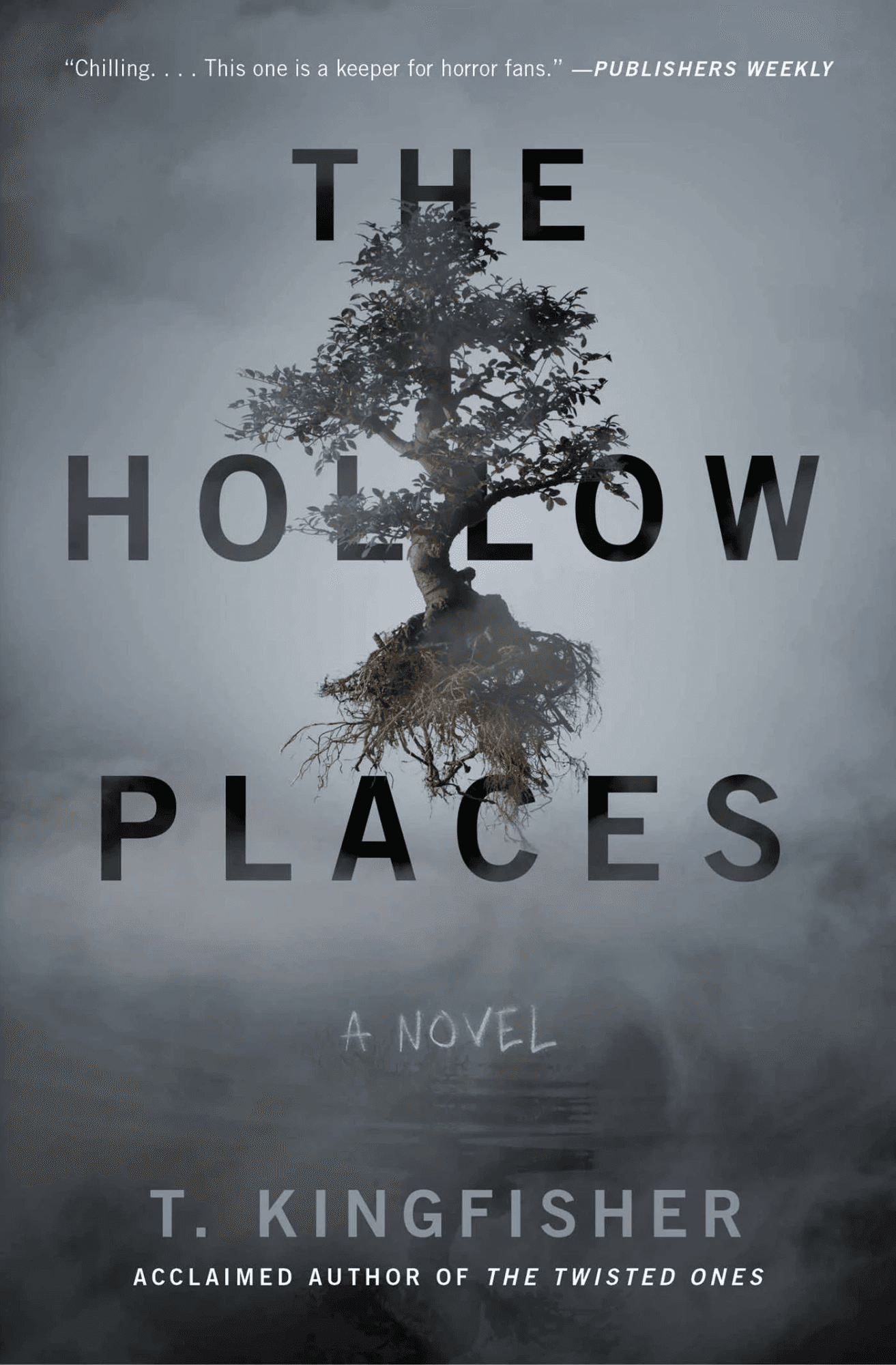
The Hollow Places by T. Kingfisher is a horror novel about a woman who finds a hole in the wall of her uncle's odd little museum, and on the other side, a silent world of willow-covered islands where something can hear you thinking. It is funny, warm and genuinely frightening, often on the same page. We give it 4.1 out of 5. Saga Press published it in October 2020, and it has become one of the most recommended modern horror novels for readers who are scared of being scared. Below you will find what the book is about, a spoiler-free summary, our honest review, how scary it is, the content warnings, a clearly marked ending explained section, and more T. Kingfisher books to read next.
What is The Hollow Places about?
Kara, whose uncle calls her Carrot, is newly divorced, broke and back in her mother's spare room. When her Uncle Earl needs help running the Glory to God Museum of Natural Wonders, Curiosities, and Taxidermy in Hog Chapel, North Carolina, she moves in gladly. The museum is a lovable mess of stuffed animals, fake shrunken heads, real artifacts and roadside oddities, and Earl is the kindest man she knows.
Then Earl's knee gives out and he leaves for surgery, and Kara discovers a hole in the drywall. Behind it is a corridor that should not fit inside the building, and at the end, a concrete bunker on an island in a misty river. There are more islands, more bunkers, a school bus where no school bus could be, and willows with silver leaves that whisper in the wind. Kara and her friend Simon soon learn the rules of this place the hard way: do not draw attention, do not panic, and above all, do not let Them hear what you are thinking.
The Hollow Places summary (spoiler-free)
- Kara moves into the Wonder Museum and settles into a cosy routine with Uncle Earl, her cat Beau and Simon, the barista from the coffee shop next door.
- After Earl leaves for surgery, Kara and Simon follow the hole in the wall and find a dead body in a bunker, along with messages scratched into the walls.
- They become trapped in the willow world, where they meet Sturdivant, a park ranger who has been lost there for far too long.
- Getting home is only half the problem. Something from the willow world has already found its way into the museum.
Is The Hollow Places a retelling of The Willows?
Not exactly, but it is a loving homage. The willow world is inspired by The Willows, Algernon Blackwood's classic 1907 story about two canoeists stranded on an island in the Danube, which many horror writers, including H. P. Lovecraft, considered one of the most frightening tales ever written. Kingfisher borrows its landscape and its idea of an alien presence that notices you, then builds a completely new, very modern story around it. You do not need to know Blackwood's story to enjoy the novel, but if you do, the Danube connection near the end is a treat.
Our review of The Hollow Places: what works
Kara and Simon are the best horror duo in years
Kara is sharp, self-aware and very funny, and Simon, her colourful friend from the coffee shop next door, is just as good. Their banter is what keeps the book moving, and their friendship gives the story its heart. When things go wrong, you care because you like them so much.
Cosmic horror you can feel
The willow world is one of the creepiest settings in modern horror. Nothing in it is fully explained, and Kingfisher knows that the unknown is scarier than any monster. The silence, the humming, the light moving in the willows and the idea that your own thoughts can give you away create a slow, creeping dread that stays with you.
Humour that makes the fear sharper
The jokes never cancel out the horror. Instead, they make it hit harder: you relax, you laugh, and then the next scene pulls the floor away. Few authors balance comedy and terror this well.
The Wonder Museum
The museum is a character in itself, packed with taxidermy, curiosities and Earl's good-hearted nonsense. It is the safe, warm place the reader comes to love, which makes it all the more frightening when the strangeness follows Kara home.
What stood out when we read The Hollow Places
Consider a few specific moments from the book that shaped our verdict:
- Kara's inventory of the museum is one of the funniest pages in modern horror. It lists forty-six stuffed birds, three stuffed albino raccoons, two jackalopes and fur-bearing trout. There is also a so-called Genuine Feejee Mermaid that she keeps begging Earl to rename, or at least explain with a sign.
- That inventory does more than get laughs. Because Kingfisher makes the museum so specific and so loved, the willow world feels far colder by comparison.
- The school bus is the image that stayed with us. It sits buried axle deep in the sand, tilted to one side, with willows grown up and through it, completely recognisable and completely wrong.
Other takes worth reading: the Kirkus review of The Hollow Places and T. Kingfisher's official website. For rules-based dread in another isolated house, read our The Caretaker review.
What does not work as well
A slow, cosy start
The first chapters are mostly about the museum and Kara's life after her divorce. They are charming, but readers who want horror from page one may grow impatient before the hole in the wall appears.
The jokes will not suit every reader
Kara's voice is chatty and full of asides. Many readers love it, but if you prefer your horror bleak and serious, the constant humour can feel like it breaks the tension.
How scary is The Hollow Places?
It is properly scary, but not gory. The fear comes from atmosphere, isolation and things glimpsed rather than seen, and it builds to a few truly nightmarish scenes, especially on the school bus and in the river. There is some body horror, but it is short and not graphic. If you are new to horror, this is a great book to start with. If you are a seasoned horror fan, the willow world will still get under your skin.
The Hollow Places content warnings
- Dead bodies and death
- Body horror and creepy animated taxidermy
- Injury, including a serious knee injury
- Anxiety, panic attacks and trauma
- Divorce and an emotionally difficult past relationship
- Mild language. There is no sex and no romance between the leads.
It is an adult novel, but with no sexual content, it suits confident readers from about 14 upwards.
The Hollow Places ending explained (spoilers)
Spoiler warning: this section reveals how The Hollow Places ends. Skip to the verdict if you have not finished it.
After their first escape, Kara and Simon seal the hole and try to return to normal life. But the danger was already inside the museum. A carved wooden otter, sent to Uncle Earl by his old friend Woody Morwood, came from the willow world itself. Woody found it on an island in the Danube, where holes between worlds had opened before. The otter wants to go home, and as it wakes, the willow world begins to leak into the museum, and the taxidermied animals start to move.
Kara is pulled back into the willow world, where she meets Sturdivant again. He is no longer the lost ranger they knew but something hollow that has become part of the river. Badly hurt, she survives by using the pain in her injured knee to drown out her thoughts, so that the beings in the willows cannot hear her. The otter, glowing with willow light, attacks Sturdivant, and Kara crawls back home as dawn breaks.
Kara and Simon finally close the hole for good with concrete. Earl comes home and is sorry he was not there. Kara is left with a damaged knee and real anxiety, and she still cannot look at a willow tree calmly. But she stays at the Wonder Museum, surrounded by the people and the strange things she loves, and the book ends on a note of curiosity and hope rather than fear.
More T. Kingfisher books to read next
T. Kingfisher is the adult pen name of Ursula Vernon, a Hugo Award winning author. If you loved The Hollow Places, try:
- The Twisted Ones: her first horror novel, also set in rural North Carolina and inspired by Arthur Machen's The White People.
- What Moves the Dead: a short, eerie retelling of Edgar Allan Poe's The Fall of the House of Usher.
- A House with Good Bones: a funny, unsettling Southern gothic about a family home that is not what it seems.
Books like The Hollow Places
- The Caretaker by Marcus Kliewer: a house, a strict set of rules and a slow-building sense that something is watching. Read our review of The Caretaker.
- Annihilation by Jeff VanderMeer: an expedition into a strange, changing landscape that cannot be explained.
- The Willows by Algernon Blackwood: the short classic that inspired the willow world.
Browse all our horror book reviews for more books that will keep you up at night.
Final verdict
The Hollow Places is that rare horror novel that is as much fun as it is frightening. Kara and Simon are wonderful company, the willow world is unforgettable, and the Wonder Museum feels like a real place you would love to visit, as long as you stayed away from the drywall. The slow start and constant jokes will not work for everyone, but this is one of the best modern horror novels for readers who want chills with heart.
Our rating: 4.1 out of 5. Best for: new and seasoned horror readers, fans of cosmic and folk horror, and anyone who likes their scares with a sense of humour.
Timothy Marks is the editor of Book Vampires. He manages the website and its content, reviews fiction across every genre we cover, and checks and approves every review and article we publish.
Keep reading
 Horror
The Cabin at the End of the World Review: Four Strangers, One Family and an Impossible Choice
The Cabin at the End of the World by Paul Tremblay
Four strangers take a family hostage at a remote cabin and demand a sacrifice to stop the apocalypse. Our review of Paul Tremblay's award-winning horror novel, who dies, the ending and Knock at the Cabin.
 Horror
The Caretaker by Marcus Kliewer Review: Follow the Rules or Pay the Price
The Caretaker by Marcus Kliewer
Broke and desperate, Macy takes a $9,000 house-sitting job that comes with a VHS tape of deadly rules. Our honest take on Marcus Kliewer's rules horror, how scary it really is and what the red sun ending means.
 Romance
Layla by Colleen Hoover Review: The Ghost Story That Divides Readers
Layla by Colleen Hoover
After Leeds and Layla are shot by his jealous ex, he takes her back to the inn where they fell in love, and something else is waiting there. Our verdict on Colleen Hoover's ghost story, plus the ending explained.